Showing posts with label Opinions and pedantry. Show all posts

Friday, March 1, 2013

Know your enemy: Shocktop, or, the rise of the fake microbrews

A few months back, as I was walking around the neighborhood, I passed by Coit Liquor, a venerable (1961) North Beach institution that has a pretty good selection of craft and foreign beers. In the window was a big, glossy display, with posters and banners, for a beer I'd never heard of, "Shock Top Belgian White." It had a mascot, an orange slice sporting a face, sunglasses, and a mohawk of grain stalks.

Behold, the banal face of evil.
Now, it's one thing to come across a beer you've never seen before. That happens all the time, even at your local supermarket, if you're lucky enough to have a good buyer or a liberal-minded distributor, at least in parts of the country where distributors have access to a range of craft beers.

But when you go by your local bottle shop, and there's not just a new beer, but a new beer with copious marketing materials featuring a cheezy mascot, well, there's something skunky in Denmark.

Similarly, a few years ago, I happened to be in Las Vegas for some work function, and I went down to the bar, looking for a beer. All they had was Big Yellow, in its various incarnations ("lite," "dry," whatever), and something called "Blue Moon Belgian White," which I didn't recognize, and sounded like the closest thing to a craft beer I was going to get. So I ordered it. They served it in a logo glass, with a slice of orange. It was pale. It was bland.

It was Coors.

Shock Top is Bud.

Welcome to the world of fake microbrews.

The fact is that, all the craft brew in America represents a mere drop in the bucket - 6% of the volume and 9% of the dollar value. America's largest craft brewer, Sam Adams, sells 2.5 million barrels and has a revenue of $512 million. (Yeungling is roughly the same size; the two are essentially tied for the title of largest American brewer.) By contrast, Anheuser-Busch (AKA Bud), the formerly American company that's now owned by multinational AB InBev, sells 121 million barrels, has an annual revenue of over $15 billion, and controls 48% of US market share. The second largest brewer in America, MillerCoors (owned by multinationals SABMiller and Molson Coors), controls 30% of the US market.

Imported beer--most of it produced by companies owned by InBev (which owns Bass, Beck's, Boddington's, Corona, Franziskaner, Goose Island, Hoegaarden, Labatt, Leffe, Lowenbrau, Modello, Oranjeboom, Pacifico, Schooner, Spaten, St. Pauli Girl, Stella Artois, Whitbread, and many others), SABMiller (which owns Peroni, Pilsner Urquell, and many others), Heineken (which owns Moretti, Affligem, Amstel, Beamish, Murphy's, Dos Equis, Tecate, Sol, Bohemia, and many others), and Carlsberg (which owns Kronenbourg and many others)--constitutes the remainder of the US market. In fact, those 4 produce over half the world's beer.

But, you say, what about all of the other big ol' US brands?

Michelob, Rolling Rock, Natural Light? Anheuser-Busch.

Hamm's, Milwaukee's Best, Icehouse, Killian's Irish Red, Keystone, Henry Weinhard? MillerCoors.

Pabst? (Yes, I'm looking at you, you hipsters swilling your "ironic" PBRs...) Pabst hasn't actually brewed its own beer since 1996, when it contracted all its brewing, first to Stroh (which Pabst bough 3 years later), and then in 2001 to Miller. Today it's little more than a marketing and real estate company, holding the Schlitz, Old Milwaukee, Stroh's, Colt 45, St. Ides, Lone Star, Olympia, Rainier, Schaefer, and other brands.

Consolidation in the American brewing industry can be traced back to the 1950s, when TV advertising allowed for the creation of national identities for breweries. By the early 80s, the number of breweries in the US had fallen from 407 to 83, controlled by 44 companies, the top 6 of which (Anheuser-Busch, Miller, Heilman, Stroh, Coors, and Pabst) controlled 92% of US beer production. It didn't help, of course, that they were all producing more-or-less indistinguishable products on an industrial scale. Control over advertising and distribution channels was really the only determinant of success.

The influence of the Great Imperialist Brewing Satan warped the resurgence of regional microbreweries that began in the mid-80s. A prime example can be found in Portland's Widmer Brothers (founded in 1984), the brewery that introduced hefeweizen to America; and Seattle's Redhook (founded in 1981), with its signature ESB. To compete nationally, these two merged in 2007 to form the Craft Brew Alliance (which later bought Kona Brewing); but because of the GIBS's stranglehold on distribution, they had to sell a third stake to AB InBev to get access.

And now, perhaps most insidious of all, aside from the microbreweries owned or part-owned by Big Yellow, are the fake micros like Blue Moon and Shock Top. The beer case in your local grocery or liquor store is already a battleground, where legitimate microbrewers must fight for shelf space against Bud, Bud Light, Miller, Miller Lite, Coors, Coors Light, in bottles, cans, six-packs, twelve packs, and suitcases; not to mention the "black crown," "chelada," "chill," "draft," "dry," "high life," "ice," "lime," "private reserve," "premium," "red," "select," and "wheat" permutations they can think of to force sellers to put on the shelves and try to convince you it's not Yellow. But now they have to compete for the tiny sliver of "microbrew" shelf space against the fake microbrews (or "nostalgia" brands), because the market is essentially saturated with a commodity product, and the macrobrewing dinosaurs are reduced to trying to stamp out the craft brewer mammals underfoot to try to squeeze out the last pips of profit, in the process crushing all innovation, diversity, and regional character.

Grrrrrr... </rant>

Wednesday, October 17, 2012

Homebrewing in the White House

Last year, there was a news story about how President Obama purchased a homebrewing kit so that his kitchen staff could brew beer at the White House, using honey from the beehives he'd had installed there. Needless to say, homebrewers across America were happy to get some national exposure for their hobby, and lots of people emailed me the story.

Naturally, being a curious lot, some of us wanted the White House's recipes, and a couple of months ago at least two people submitted Freedom of Information Act requests to get them. So, brewing at the White House was again in the news at the beginning of September when the recipes were published, and again people sent me the stories to ask what I thought of the recipes, and whether I planned to try them.

At the risk of losing my chance to ever share a beer with the president, let me say that I was not impressed. The recipes, for a honey ale and honey stout, call for using canned malt extract. I didn't know that anyone even sold canned malt extract anymore.

Malt extract is basically a syrup, what you'd get if you took the sweet wort from mashing grain and boiled it down to the consistency of liquid caramel. To be fair, it's how most homebrewers start, because it takes some specialized equipment and a little finesse to mash grain. Most beginning homebrewers do what the White House recipe does, which is called a partial mash. You soak 1-2 pounds of specialty grains, for example the toasted dark malts that give a porter its color and chocolate/coffee/toffee characteristics, in hot water an a cheesecloth bag to extract the flavor from them; and then you add malt extract to the water and boil it.

That's what I did for about the first 2 years and 25 batches of beer I made. After that, I got a mashing rig and did a full mash or all-grain recipes, where all your wort comes from grain. That gives you more control over the grains you use, and thus over the flavor.

In using malt extract and a partial mash, the White House made their recipe very accessible to novice homebrewers, so in that respect it's a good thing. But canned malt extract... that's like a casserole recipe that calls for a can of cream of mushroom soup. You can still buy it, but then you're limited to to the amount in the cans (typically 3.3 pounds; apparently the WH gets around this limitation for using dry malt extract to round out the amount needed; and let me tell you, that stuff is a PITA to work with, it sticks to everything), and I'd be concerned about freshness. I suppose it'd be OK if you didn't have a local homebrew store and had to get your stuff through mail-order, but better mail-order places sell plastic/foil packets of extract that will be much fresher than canned. Although I guess I should be glad they didn't go really old-school and call for hopped extract, which basically (gods only know how) included some sort of hop extract in the malt as well.

So, while I applaud the White House for spotlighting the hobby, and for making their recipes accessible to beginners, I wish they'd used a little more current ingredients.

Wednesday, October 10, 2012

Building a kegerator

There comes a time in every homebrewer's life when he gets sick of washing bottles, and he decides to start kegging his beer. I say "his," but let's face it, probably 95% of homebrewers are men. Which also leads to the fact that men want a "man cave," and man cave + beer keg = kegerator. And, we're not just talking about a refrigerator with a keg in it; we're talking about a tap in the door.

Of course, you could buy a kegerator, but what's the fun in that? Homebrewers are, by definition, DIY guys, and you can convert a refrigerator into a kegerator for less than $100 (soda kegs and CO2 tank not included, but those can be readily purchased on the cheap on eBay).

And so, a photo essay, as Your Author builds a kegerator!

Behold, a refrigerator, purchased for $100 off craigslist. Price did not include renting an appliance dolly to haul it 3 blocks, nor the cost in waking up Dr. P from her Saturday morning slumber to help me haul it...

The necessary hardware: food grade plastic tubing, tap, shank, nipple, hose clamps, keg connector, drill drip tray, measuring tape.
Measure twice, drill once. Because of the interior configuration of the door, the tap has to be a little off-center.
The sheet metal exterior of a most refrigerators is pretty thin; you can cut through it with a 12-volt cordless power drill and a 1" spade bit.
Beyond the sheet metal is foam, and then...
The plastic interior panel of the door.
A nice souvenir!
Now, we put the shank through the hole, and secure it with a big brass nut on the interior of the door. Not shown: me cursing when I realized that the 3" shank that I originally bought was too short, causing me to have to go back to the brew store to get a 5" shank...
Secure that shank!
Now we have to fit the hose on the nipple that will screw onto the end of the shank. The nipple is quite tight, so this actually required a goodly degree of force.
Securing the nipple with a hose clamp. Not shown on the other end is the connector that fits onto the keg, also secured with a clamp. Homebrewers typically use 5 gallon soda kegs, and there are two kinds: ball lock and pin lock. These are not interchangable, so you pretty much have to commit yourself to one kind or the other.
A nut fits over the nipple...
...and screws onto the end of the shank.
The interior hardware is now finished.
Now we attach the tap to the outside of the door. There's a little gasket that goes between them.

The tap has little teeth to help line it up...
And a special wrench to secure it. If you want to get fancy, the handle screws off and can be customized.
To keep the floor from getting sticky, we'll put a drip tray under the tap. Make sure a glass will fit under the tap!

Make sure it's level...
Screw in the screws...
And hang the tray. Finished! Now all we need is a keg of beer!

Sunday, September 30, 2012

Book review - America Walks into a Bar

Every once in a while (usually when I'm flying on a beercation or waiting for the wort to boil), I read a book. Usually, it takes me 3-6 months to finish one, but America Walks Into a Bar took me just a long weekend plus a couple of extra days, for around 280 pages.


Christine Sismond's rollicking little book is basically the history of America, as told from the perspective of the country's taverns, saloons, speakeasies, and bars. To a great extent, America's history is the history of its taverns, saloons, speakeasies, and bars, as well as its brewers, moonshiners, rum-runners, and barstool jockies. Many great events and social movements were planned in bars, and beer, cider, whiskey, and rum are often the lubricants, the context, or the villains of American history.

The final chapters on the alcohol's and bar's roles in the civil rights movements for women, African Americans, and gays go by a little too quickly, and I think that Sismond could've spent a little more time on the events that last couple of decades - the rise of craft brewing, wine, spirits, and cocktails - but overall it was a very fun read.

Tuesday, September 4, 2012

Gateway beers

Every once in a while, I run into someone who says they "don't like beer." This simply makes no sense. There's quite a bit of evidence that the Agricultural Revolution, and thus human civilization, were driven by growing cereal grains for beer. (Before he bakers protest, remember, beer and bread both evolved out of a sort of fermented malt mash porridge. Throw it in the fire, and you get bread. Strain it, and you get beer.) So, if you "dislike" beer, you might as well dislike houses, clothing, and a life expectancy greater than 30.

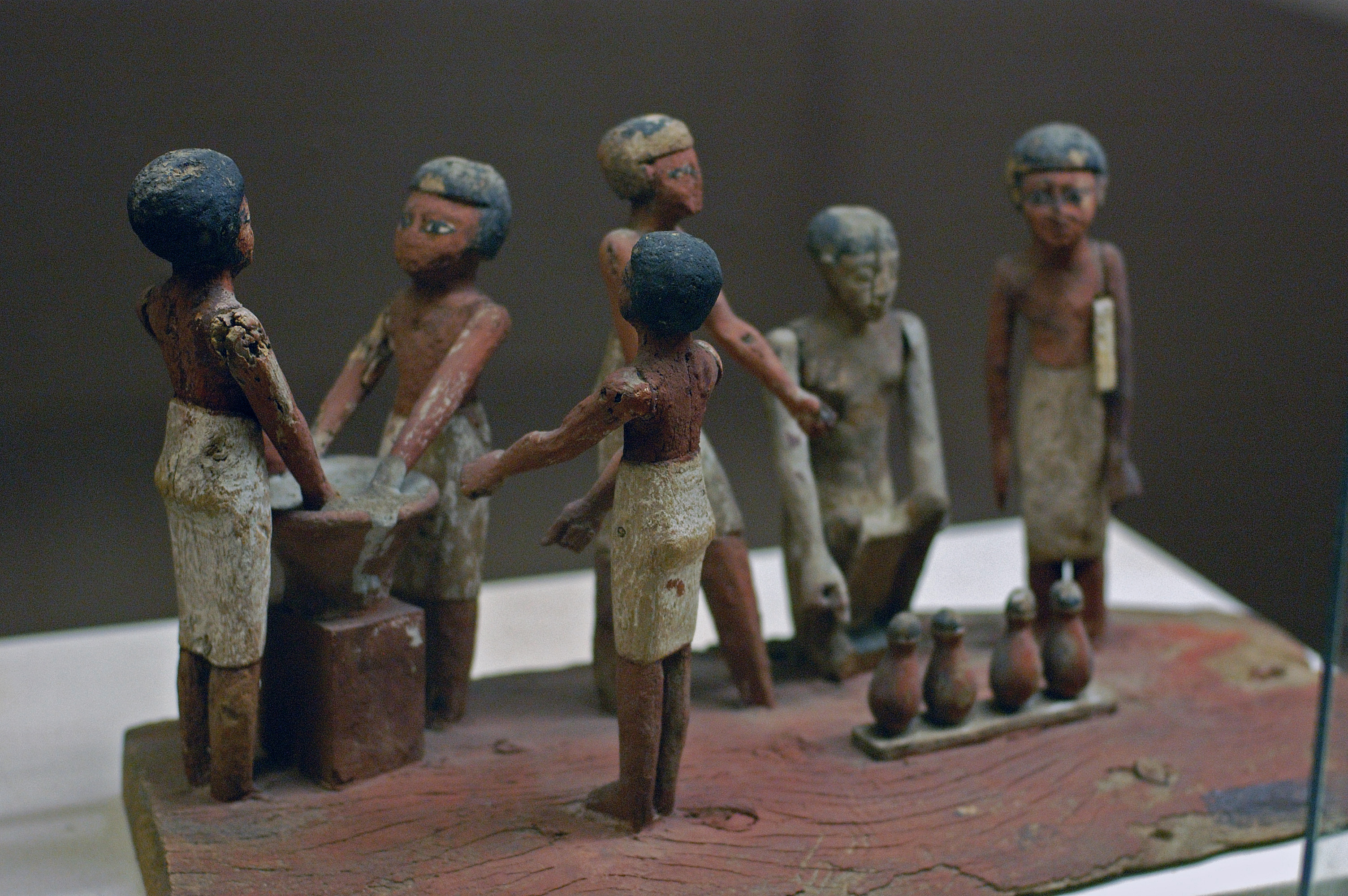
Model of Egyptians making beer
Now, there are legitimate reasons for not drinking alcohol - physical and psychological addiction, lacking the enzymes to break it down, disliking the bloated feeling or flatulence that comes from carbonation or introducing too much yeast to your gut (Dr. P will tell you this bothers me far too little...), the fear that your god will smite you (or at least send you back, and try not to frack it up again this time...). But generally, if I dig a little deeper, the answer is that this person doesn't like the taste of beer.

This, I can understand, since 95%+ of beer consumed around the world is industrial pisswater lager - or, more correctly, industrial pisswater pilsner. Sadly, in some ways we must view this as the ultimate product of "civilization," not to mention colonialism.

Indeed, pilsner itself isn't a bad beer, but what most of the world today knows simply as "beer" is a far cry from the original, cleanly fermented, malty lager with the sparking Saaz hops. But in the brighter corners of 21st century, there's such a dizzying array of different craft beers available, that there's at least one for just about every palate. If you can get your friend to give up their preconceptions and prejudices about what "beer" tastes like, and try them.

To simplify that task, I want to suggest 3 craft beer styles that I think are excellent "gateways" to blow the minds of people who think they don't like beer, expand their consciousness about, and thirst for, beer. One your probably familiar with, but two you probably know only if you're a beer afficianado, and even then one if those may surprise you.

Porter

Porter was my gateway beer. Although it was a mainstay of the British working class in the 18th and 19th centuries, it nearly died out in the 20th. It was brewed in New England and Pennsylvania, but was overtaken by pilsner in the US in the mid-19th century.

Porter is a good gateway beer because it's flavor profile matches things that most people enjoy eating, or indeed consider a treat: chocolate, coffee, toast, nuts, caramel, toffee. It's not usually aggressively hopped, for those who complain that "beer" is too bitter.

However, the dark color and rich flavor can lead people to believe that it's high in alcohol (remember that alcohol comes from the *amount* of grain, while color, texture, and flavor come from how the grain is prepared - we'll talk more about this and other beer myths in a future post). This is, sadly, particularly true of women, whom marketing has taught to like light colored/flavored beer (if they drink beer at all - the history of American beer and it's marketing to women will be the subject of another, even more bilious post... And woe is the woman who comes into a beer bar where I'm drinking and orders a glass of Chardonnay...).

Solving this problem brings us to our second gateway beer...

Saison

Saison (SAY-sohn, from the French meaning "season;" NOT say-SOHN, the French Post-Impressionist painter) began as Belgian (actually, Walloon) "farmhouse" ale that is, the homebrewed beer that Belgian farmers would serve their field hands along with their traditional meal of fried egg-battered toast and waffles dipped in mayonnaise (yes, that's several obscure cultural jokes rolled into one...).

Saison is friendly-looking, but it's almost instantly obvious that something interesting is going on here. It's light colored, but more straw than gold, and may even be a little cloudy if it was bottled conditioned (that is, carbonated with live yeast in the bottle, which settle to the bottom, rather than pasteurized and filtered). Then take a smell - rather than hops - bitter, grassy, or piney - you'll get subtle fruits, perhaps a hint of orange or stone fruit; a little spicy, perhaps cloves or corriander; and perhaps just a hint of soft funkiness, which the modern palate, pasteurized, sanitized, refrigerated, and vacuum-sealed - recalls from another, more home-spun era.

Flemish Sours

OK, this is the one that the beer snobs may question at first. The northern part of Belgium, Flanders, produces an different styles of beer, sour reds and browns. These beers are innoculated with wild Brettanomyces yeast, and/or bacteria like lactobacillus (which sours milk), and turn some of the sugars and alcohols in the beer to lactic acid or acetic acid, producing a tart, pucker sourness, which contrasts to the malty, fruity sweetness of the beer. (Russian River Brewing, in Santa Rosa, CA, makes a wide range of these types of beer.)

Sour beers tend to be the last beers that beer connoisseurs acquire a taste for, and many never do, as their taste is almost completely unlike any other. But, conversely, they make excellent gateway beers for wine drinkers, who will grock their fruitiness, tartness, and barrel-aged funkiness. Sours aren't bitter, aren't too sweet, and usually aren't too bubbly, but instead are the closest beers to wine, and are the most likely to convince wine drinkers that craft beers can, in fact, be complex and worthy of their notice.

Friday, August 3, 2012

What do those numbers mean? ABV and IBUs

You may have noticed that my reviews include two numbers for each beer - ABV and IBUs. By law, you'll see ABV on every commercial bottle of beer. Brewpubs and dedicated beer bars will often post the ABV, and sometimes the IBUs, of the beers they serve. So, what do those numbers mean?

In case you're wondering, that's not my hand.

ABV is Alcohol By Volume, the most common way of describing how strong a non-distilled alcoholic beverage is. (The strength of distilled beverages is typically given as proof; to determine ABV, divide proof by 2; the other measure for non-distilled beverages ABW, Alcohol By Weight, was used in the US, but most brewers now use the ABV standard.)

A beer's alcohol content is determined by two things:
  • The amount of grain in the mash, which provides the sugar that the yeast have to consume to turn into alcohol.
  • The strain of yeast used. Since the yeast, in producing alcohol, are essentially releasing a toxic substance into their environment, they can eventually poison themselves, but different varieties of yeast have different levels of alcohol tolerance. Most beer yeast top out in the 5-7% ABV range, although some strains will go as high as 10-12%. Champagne yeasts reach 15-16%, and strains have been bred that will actually ferment up to 40%!
The combination of grain mashed and yeast strain used also determines the amount of residual sweetness in the beer. If the amount of sugar produces alcohol below the yeast's tolerance, the yeast will consume all of the sugar, leaving a "dry" beer. (There's typically some residual sweetness from sugars that the yeast can't metabolize; sometimes brewers will deliberately add such sugars, for example, lactose in milk stouts.)

Love, exciting and new...


If the yeast hits its tolerance, and there's still sugar left unconsumed, that sugar will also contribute to residual sweetness. Using a low-tolerance yeast could give you a weak, but sweet, beer.

IBUs are International Bittering Units, the standard for describing a beer's hop bitterness. The formula for this is rather arcane, but it boils down (pun intended) to three factors:
  • The variety of hops used. There are dozens of different varieties of hops, and each is rated for its alpha acid content, which is the amount of lupulin resin it contains as a percentage of the weight of the hop flower. When hops are boiled, the lupulin is isomerized, that is, converted into the acid that makes beer bitter. (There's a second acid, called beta acid, that contributes a negligible amount of bitterness.) Most hop varieties fall in the 3-6% alpha acid range, but growers continue to develop new breeds, some pushing 20%.
  • How much hops are used. Pretty self-explanatory.
  • How long the hops are boiled. The length of time that the hops are boiled determines how much of their alpha acid is isomerized. It takes about 75 minutes to completely isomerize all of the lupulin; and, as they're boiled, other flavor and aroma characteristics that the hops possess are boiled away. So, typically, brewers will add hops at different points in the boil - some in the very beginning that they'll boil for the whole time, just to bitter the beer; some in the middle of the boil, to add flavor characteristics and a little more bittering; and some near the end, to provide more volatile aromatics, but almost no bittering. Brewers can also add unboiled hops to the fermented beer, called dry hopping, for an extra dose of aromatics. In recent years, craft brewers have started producing wet-hopped beers. Hops are typically dried before they're added to beer; wet-hopping adds fresh, undried hops to the finished beer, for an even more intense hop aroma. Some really crazy hop-heads like to run their beer through fresh hops right on their way from the keg to the glass, with gadgets like Dogfish Head's Randall the Enamel Animal.
I hate you.
As mentioned in a previous post, I've heard it said that the human palate tops out at about 100 IBUs, although a few breweries make even more bitter beers. The bitterness itself, however, is often offset by residual sweetness in the beer, or by hop flavor or aroma, so IBUs, in and of themselves, won't tell you how you will experience the hoppiness of the beer.

Monday, July 30, 2012

What is beer?

Since the topic of this blog is beer, it might behoove us to discuss what, exactly, beer is.

Pretty much all alcoholic beverages begin as yeast consuming sugar (called "fermentation"), and creating, primarily, ethanol (CH3CH2OH) and carbon dioxide (CO2) as biproducts.

Saccharomyces cerevisiae, AKA ale yeast
The CO2 escapes, although in the case of beer and wines like champagne, some of the fermentation occurs in the bottle and some of the gas dissolves into the beverage, making it carbonated. Yeast metabolism also creates other biproducts, such as esters, phenols, methanol, and higher-order alcohols, which contribute flavor and other characteristics to the finished beverage.

An alcoholic beverage that's distilled undergoes a process, usually evaporation and condensation, that separates the ethanol from the water and other chemicals that the yeast produce through fermentation. Depending on the process, the goal can be to create as pure (and consequently flavorless) ethanol as possible (like vodka), or retain some of the other chemicals that add flavor (as in whiskey or brandy). Some amount of water (usually 60-80%) and other flavorings (including those that come from barrel aging) can be added to the distillate.

Working backwards from fermentation, the next thing that distinguishes alcoholic beverages is the source of the sugar, whether from sugar cane (rum), honey (mead), or fruit (wine and fruit brandies). Sugar can also come from breaking down starches, which are long chains of sugars. Plants store sugars as starches in order to prevent other organisms like bacteria, mold, and yeast, from eating them; and then use enzymes to break the chains back apart into sugars when they need to consume them for energy. (Some plants keep sugars available for other organisms to consume, such as in their flowers or fruit, to lure/reward them for pollinating the plant or spreading its seeds.) Starches are broken down into sugars to make vodka (potatoes and other things), sake (rice), and, of course, beer.

Traditionally, barley has been used for making beer, because of its high protein content, and because its kernels contain a large amount of the enzymes necessary to convert its starch back into sugar.

2-row and 6-row barley
To do this, the barley is first warmed and wet make it germinate, which activates the enzymes to feed the new plant. This process is called malting. The malt is then kilned to stop the plant from growing, dry it for storage, and possibly to carmelize some of its sugar to add flavor to the beer. Beers can use other grains - wheat (as in hefeweizen), rye, oats, corn, rice, sorghum - or other forms of sugar like honey or molasses; but barley typically predominates. Each type of grain, and how it's treated (for example, the roasted barley used to add dark color to stouts), contributes to the flavor of the beer.

To begin the brewing process, the brewer soaks barley in hot water to reactivate the enzymes and release its sugar. This process is called mashing. The brewer then runs water through the mash and collects the run-off sugar water (called wort). The mineral content of the brewery's water affects the mash process and the flavor of the beer.

Next, the wort is then boiled, and during the boil the last major component of beer, hops, are added.

Hops
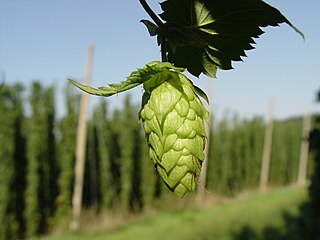
Hops are a small flower that contain a resin that breaks down into a bitter acid when boiled, which counters the sweetness of the sugar, and helps prevent spoilage from bacteria. The resin itself can add various aromas - citrusy, piney, grassy, etc - depending on hop variety. The amount, variety, and boiling time of the hops contribute flavor characteristics to the finished beer. (Historically, other plants have been used to bitter beer, but hops have been used since at least the 11th century, and became a standard ingredient in beer around the 16th century.) The brewer can add other things, such as spices, to the boil.

The boiled wort is then cooled down to a suitable temperature, the yeast is added, and fermentation begins. The strain of yeast used will add certain flavor characteristics (such as the esters and phenols previously mentioned). The brewer can add other things at this point - fermentables like fruit, or spices.

After a few days, the yeast will have consumed most of the sugar in the wort and turned it into alcohol, completing the primary fermentation. The brewer then moves the beer off the remnants of the yeast, and may let it age for a while, to let the remaining yeast finish fermenting any remaining sugar and metabolize other byproducts of the fermentation to improve the flavor of the beer, in a secondary fermentation. The brewer can also add hops (called dry hopping) to add more aromatic hop character to the beer. The beer can be aged to allow even more chemical changes to take place, or to gain additional flavor, for example by barrel-aging.

Finally, the beer is bottled or kegged. Most breweries pasteurize their beer to kill any remaining yeast, or bacteria that have snuck in, to prevent spoilage. In this case, the brewery will pump CO2 into the bottle to carbonate the beer. Some breweries allow yeast to live and continue to make changes to the flavor of the beer over time, called bottle conditioning. In this case, as the yeast consumes residual sugar in the beer, it will produce the CO2 that carbonates the beer,

So, that's what beer is. Talking about how different combinations of water, grains, hops, yeast, and other things create porters, stouts, pale ales, IPAs, hefeweizens, pilsners, marzens, lambics, and all the other myriad styles of beer - will have to wait for another day!